

A Manhattan investment property can look attractive on paper. It may have a desirable location, a fully occupied rent roll, and an asking price that suggests room for future growth. However, when buying an investment property in NYC, these details are only the starting point. They do not confirm that the building is legally compliant, physically sound, properly insured, or generating the income presented by the seller.
Consider a mixed-use building that appears fully occupied. A closer review may reveal that the commercial tenant is receiving temporary rent concessions, one residential unit has an unclear legal configuration, or the operating statements do not include an upcoming major repair. These findings may not automatically end the transaction, but they can affect the property’s value, financing requirements, purchase timeline, and expected income.
Due diligence helps buyers verify what they are actually purchasing. Before making an offer, signing a contract, arranging financing, or completing the transaction, investors should review the building’s legal use, tenant obligations, income, operating expenses, physical condition, and potential future risks.
Why Due Diligence Matters When Buying an Investment Property in NYC
New York City properties often contain layers of history. A building may have multiple alterations, commercial and residential occupants, old leases, unresolved violations, rent-regulated units, complicated utility arrangements, or improvements that do not match the available records.
That history can affect value and operations long after closing. A low purchase price may be offset by a major roof replacement, a tenant dispute, an insurance limitation, a legal-use issue, or income that cannot be collected consistently.
For investors evaluating commercial properties in NYC, commercial property due diligence typically involves a coordinated review by a broker, attorney, accountant, engineer or inspector, lender, insurance professional, and sometimes an environmental consultant. Each professional examines a different part of the risk.
What NYC Investment Property Due Diligence Covers
A useful due diligence process should answer five basic questions:
- Can the property legally be used as represented?
- Does the documented income match the seller’s projections?
- Are the leases, tenants, and operating obligations understood?
- What repairs or capital improvements may be needed?
- Can the property be financed and insured on acceptable terms?
The process is not always linear. An initial financial review may identify questions for the physical inspection. A building-record search may reveal an alteration that requires an architect or expeditor. An insurance quote may expose a condition that affects financing or valuation. The level of review also varies by property type. A multifamily acquisition may focus heavily on unit histories and tenant records. A retail or office property may require more extensive lease, use, access, and tenant-credit analysis. Mixed-use buildings combine many of those issues at once.
Pre-Offer Financial Review
Before spending heavily on professional reports, conduct an initial screening. Request the current rent roll, operating statements, real estate tax information, utility costs, insurance history, service contracts, and a summary of recent repairs. Compare the asking price with the property’s documented income and expenses, but avoid relying on a headline capitalization rate. A capitalization rate is a property’s net operating income divided by its price. It can be useful as a screening tool, but the result is only as reliable as the income and expense figures behind it.
An investor reviewing an income-producing property in NYC should ask:
- Are all units and spaces occupied?
- How much rent is actually being collected?
- Are vacancies temporary or structural?
- Are expenses based on current invoices or estimates?
- Are repairs being deferred?
- Are taxes, insurance, utilities, and management costs complete?
- Are there upcoming capital needs that do not appear in ordinary expenses?
A buyer considering a first multifamily property purchase may benefit from reviewing these questions with a broker and accountant before making assumptions about future cash flow.
Reviewing the Commercial Property Rent Roll

A commercial property rent roll should identify each unit or space, tenant, lease dates, current base rent, additional rent, security deposit, options, arrears, and occupancy status. Depending on the asset, it may also show escalations, percentage rent, free-rent periods, expense reimbursements, and other concessions.
Do not assume that scheduled rent equals collected rent. Compare the rent roll with executed leases, amendments, payment ledgers, security deposits, and accounts receivable. A tenant listed at a particular rent may be paying less because of a concession, withholding payment, disputing charges, or carrying an unresolved balance.
Look for inconsistencies such as:
- A lease expiration that differs from the rent roll
- Renewal options that are not reflected in projections
- Vacant space shown as income-producing
- Tenant-improvement or free-rent obligations
- Security deposits that do not match lease requirements
- Arrears or write-offs omitted from the seller’s summary
- Operating expenses passed through to tenants but not supported by lease language
The goal is to determine both contractual income and realistic collected income.
Verifying Income and Operating Expenses
Request several years of property operating statements when available, along with current year-to-date results. Reconcile gross potential rent with vacancy, concessions, bad debt, and other deductions to estimate effective income.
Then review ordinary operating expenses, including:
- Property taxes
- Insurance
- Water and sewer
- Gas and electricity
- Repairs and maintenance
- Cleaning and waste removal
- Property management
- Payroll or superintendent costs
- Legal and accounting expenses
- Pest control
- Elevator, boiler, fire-safety, and other service contracts
Net operating income, or NOI, generally represents property income minus ordinary operating expenses before debt service and income taxes. Debt payments and major capital expenditures are normally analyzed separately from routine operating expenses. A new roof, façade project, boiler replacement, or major electrical upgrade should not be hidden inside an overly optimistic recurring expense assumption.
Ask whether expenses are unusually low because the building is efficient or because maintenance, management, insurance, or reserves have been understated. Investors should also understand how NYC property management fees may affect realistic operating projections. An accountant can help normalize the numbers without turning a short-term budget into a guaranteed forecast.
Lease and Tenant Due Diligence
A lease abstract summarizes the material business terms of each lease. It should identify the premises, term, rent schedule, renewal options, security, guarantees, use restrictions, repair duties, insurance requirements, default provisions, assignment rights, and expense obligations.
For commercial tenants, review whether the lease allows the tenant’s actual use and whether the tenant is responsible for taxes, utilities, common-area costs, repairs, or other reimbursements. For retail properties, examine exclusivity clauses, co-tenancy provisions, signage rights, access, delivery arrangements, and percentage-rent provisions where applicable.
Tenant concentration also matters. If one commercial tenant produces a disproportionate share of the building’s income, that tenant’s financial condition, lease expiration, renewal likelihood, and relocation alternatives may materially affect value. Payment history deserves the same attention as lease language. A tenant may be legally obligated to pay a stated amount while the owner consistently collects less because of concessions, disputes, or payment problems.
Mixed-Use Property Due Diligence
Mixed-use property due diligence is more involved because residential and commercial uses may operate under different leases, rules, systems, and risk profiles within the same structure. Confirm that the actual residential, retail, office, or other uses are consistent with the available Certificate of Occupancy and building records. Then determine how heat, water, electricity, gas, trash removal, repairs, and common areas are allocated. A commercial tenant may separately meter electricity while residential tenants share another system, or the building may contain older arrangements that are difficult to reconcile.
Review:
- Separate and shared utility systems
- Commercial and residential lease structures
- Storefront and signage rights
- Residential tenant obligations
- Fire and life-safety systems
- Insurance requirements for different uses
- Noise, odor, ventilation, and access concerns
- Loading, deliveries, and sidewalk use
- Repair responsibilities between occupants and owner
A restaurant, medical office, or food-related tenant can create different ventilation, plumbing, grease, environmental, and insurance questions than an ordinary retail occupant. The legal, engineering, and insurance review should reflect the actual uses not merely the property’s marketing description.
Legal Use, Zoning, and Building Records
Start with the Certificate of Occupancy or other evidence showing the building’s legal use and configuration. New York City provides official Certificate of Occupancy information, but an online record review does not replace professional advice.
Review the property through the NYC Department of Buildings, including available DOB NOW and Buildings Information System records. Look for applications, permits, complaints, violations, certificates, and unresolved work. Compare those records with the physical building and the seller’s disclosures.
For zoning and land-use context, use the NYC ZoLa zoning and land-use map. It can help buyers research zoning districts, permitted land uses, overlays, and special districts where applicable. ZoLa is a research tool, not a substitute for review by an attorney, architect, zoning professional, or other qualified adviser.
A renovated apartment, converted commercial space, rear addition, storefront, or rooftop structure may not match approved records. An architect, engineer, attorney, or qualified expeditor can help determine what the discrepancy means and what corrective work may be required.
Title, Liens, Property Taxes, and Assessments
A title search examines ownership and recorded interests affecting the property. Counsel will typically review deeds, mortgages, easements, restrictions, covenants, judgments, liens, and other recorded documents. ACRIS is an official tool for researching many recorded documents in New York City, although the formal title process should be handled by the buyer’s title company and attorney.
Verify property tax records and assessment information independently rather than relying only on a marketing package. Ask about pending tax matters, exemptions, abatements, payment status, and assessments that may affect future operating costs. The treatment of taxes and assessments depends on the property and transaction, so a tax professional should review material issues.
Also consider the planned ownership structure and future exit. An investor who may eventually be selling an investment property in NYC should understand which building, lease, title, and capital issues could affect its marketability.
Rent-Regulated and Occupied Residential Units
Multifamily and mixed-use buildings may contain rent-regulated or otherwise restricted apartments. Do not make assumptions based only on current rent, a lease label, or a seller’s summary.
Qualified counsel and specialists may need to review leases, registration records, unit histories, rent records, notices, tenant files, and applicable state or local requirements. The review can affect projected income, renewal assumptions, renovation plans, vacancy strategy, and legal exposure.
New York State Homes and Community Renewal provides official information about rent regulation and related housing programs. Buyers should obtain professional advice before relying on a projected residential rent or planned change in occupancy.
Physical Inspection and Capital Needs
An investment property inspection NYC buyers commission should be broader than a basic visual walkthrough. The scope should reflect the building’s age, size, construction, occupancy, systems, and intended use.
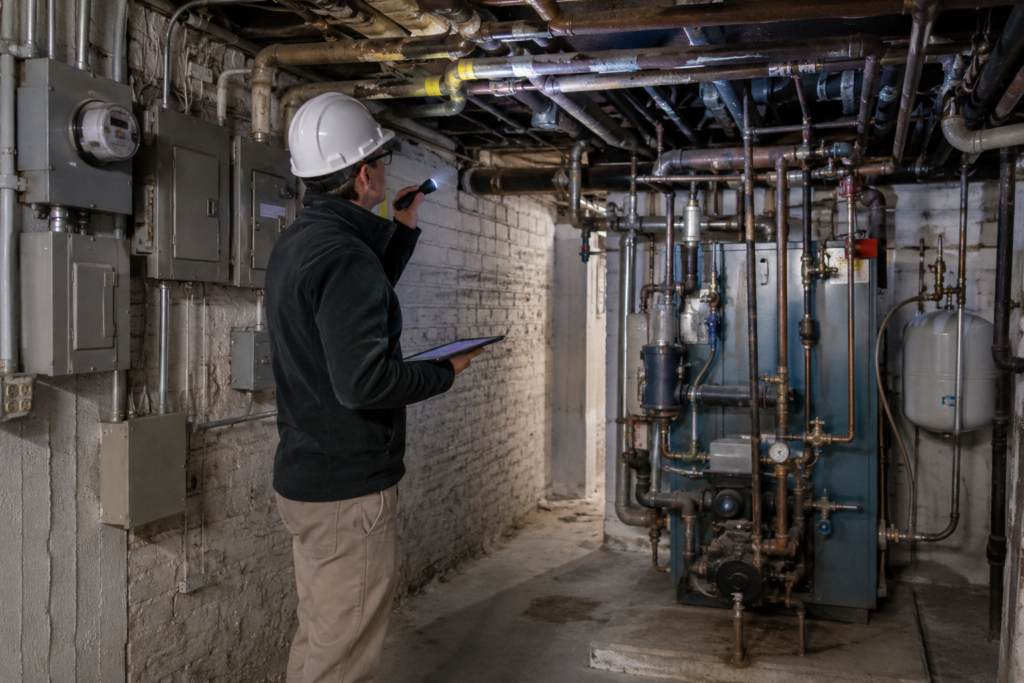
Depending on the property, review:
- Structural components and settlement indicators
- Roof condition and drainage
- Exterior walls and façade concerns
- Plumbing, risers, and sewer connections
- Electrical service and distribution
- Heating, cooling, and ventilation
- Boilers and fuel systems
- Elevators and maintenance records
- Fire alarms, sprinklers, exits, and life-safety systems
- Water intrusion, mold indicators, and drainage
- Accessibility considerations
- Environmental conditions
- Deferred maintenance
- Near-term capital improvements
A commercial building inspection may identify an immediate repair, but it should also help develop a capital expenditure plan. Ask what is likely to require attention over the next several years, what has already been repaired, and whether contractors’ reports or warranties are available. For larger or specialized properties, separate reviews may be needed for the façade, elevator, roof, boiler, environmental conditions, structure, or accessibility. The appropriate professionals depend on the building and the transaction.
Environmental and Location Risks
Consider a Phase I environmental assessment when the property’s history, location, or current use warrants one. Previous dry-cleaning, automotive, manufacturing, fuel-storage, or industrial uses may justify additional investigation. Underground storage tanks and soil or groundwater concerns can affect financing, insurance, cleanup obligations, and value.
Lead- or asbestos-related concerns may also require qualified testing or management planning, particularly in older buildings or during renovation. Do not treat the absence of a visible problem as proof that no environmental issue exists.
Location review should extend beyond the block. Check flood exposure, insurance availability, transportation changes, nearby construction, planned development, and neighborhood land-use conditions. These issues may not prevent a purchase, but they can influence operating costs, tenant demand, construction timing, and resale assumptions.
Financing and Insurance Confirmation
Financing and insurance should be tested before the transaction becomes difficult to unwind. Lenders may require an appraisal, environmental report, property-condition assessment, leases, operating statements, reserves, and evidence that violations or repairs are addressed.
Insurance professionals should quote coverage based on the actual building, uses, claims history, construction, systems, and tenant mix. A retail tenant using cooking equipment or a building with an older boiler may produce different underwriting questions than a conventional apartment property.
Loan approval and insurance availability are never automatic. Confirm conditions, deductibles, exclusions, reserves, and required repairs early enough for your attorney and broker to evaluate their effect on the transaction.

NYC Investment Property Checklist
| Due Diligence Area | Documents or Records to Review | Main Question to Answer | Professional Who May Help |
| Income and rent | Rent roll, leases, ledgers, operating statements | Is income contractual and collectible? | Broker, accountant |
| Tenants | Lease abstracts, amendments, deposits, guarantees | What obligations and rollover risks exist? | Real estate attorney |
| Legal use | Certificate of Occupancy, DOB records, permits | Does actual use match approved use? | Attorney, architect |
| Zoning | ZoLa, zoning records, landmark information | Are current and planned uses permitted? | Zoning attorney, architect |
| Title | Deeds, mortgages, liens, easements, ACRIS records | Are ownership and recorded interests clear? | Title company, attorney |
| Physical condition | Inspection, roof, façade, boiler, elevator reports | What repairs and capital needs are likely? | Engineer, inspector |
| Residential regulation | Registrations, unit histories, tenant records | Are rent and occupancy assumptions supportable? | Housing attorney |
| Environmental | Phase I, prior-use records, tank information | Is further environmental investigation needed? | Environmental consultant |
| Financing and insurance | Appraisal, quotes, lender conditions, claims history | Can the property be financed and insured as planned? | Lender, insurance professional |
Red Flags That Require Further Investigation
A warning sign does not automatically mean you should abandon the transaction. It may instead affect valuation, timing, financing, negotiation, or the protections written into the contract.
Watch for:
- Income that cannot be supported by leases or payment records
- Rent-roll figures that conflict with leases or operating statements
- Unexplained vacancies or unusually high tenant turnover
- Open violations, permits, or complaints with no clear resolution
- Actual property use that does not match available records
- Major deferred maintenance involving the roof, façade, boiler, elevator, or life-safety systems
- Expenses materially below realistic levels for the building
- Undisclosed concessions, arrears, security-deposit issues, or tenant disputes
- One tenant producing a disproportionate share of total income
- Insurance quotes that contain exclusions, high deductibles, or required repairs
The next step is to identify what evidence would resolve the concern. Some issues can be priced, repaired, escrowed, or addressed through contract language. Others may require a revised business plan or a decision not to proceed.
What Happens After Due Diligence?
There are several possible outcomes. You may proceed on the agreed terms if the records, condition, income, and risks support the underwriting. You may also request additional documents, revise assumptions, or ask the seller to clarify a discrepancy.
If a material issue is confirmed, your attorney may negotiate a price adjustment, repair obligation, credit, escrow, representation, indemnity, or other contractual protection. Financing may need to be reassessed if the lender changes its conditions or the property’s value appears different from the initial assumptions.
In some transactions, the buyer may withdraw when permitted by the applicable agreement. That decision should be made with qualified legal, financial, and transaction advisers. Due diligence is not about finding a perfect building; it is about understanding what you are buying and whether the risks fit your plan.
Conclusion
Buying an investment property in NYC requires more than comparing asking prices or applying a projected capitalization rate. Strong investment property analysis connects documented income with actual collections, leases with tenant obligations, building records with physical conditions, and the business plan with financing and insurance requirements.
A broker can help evaluate market positioning, tenant demand, property income assumptions, and transaction strategy. Attorneys, accountants, engineers, inspectors, lenders, insurance professionals, and environmental consultants may also be needed.
If you are evaluating a multifamily, commercial, or mixed-use opportunity, an NYC real estate consultation with Jonathan Maimran can help identify the questions that should shape your review. This article is educational and is not legal, tax, engineering, lending, or investment advice.
Frequently Asked Questions
What due diligence should I do before buying an NYC investment property?
Review the property’s income, expenses, rent roll, leases, tenant payment history, title, taxes, legal use, zoning, building records, physical condition, environmental risks, insurance, and financing requirements. The exact scope depends on the property type. Brokers, attorneys, accountants, engineers, lenders, and other specialists may each address different parts of the review.
What should I check on a commercial property rent roll?
Compare each listed tenant, space, rent, lease term, deposit, option, and arrears balance with executed leases, amendments, payment records, and operating statements. Check for free rent, concessions, reimbursements, guarantees, and upcoming expirations. The central question is whether scheduled income is contractually supported and realistically collectible.
How do I verify the legal use of an NYC building?
Begin with the Certificate of Occupancy and review available NYC Department of Buildings records, including applications, permits, complaints, and violations. Use ZoLa for zoning and land-use context. Because online databases may not show every practical or legal issue, have qualified professionals compare the records with the building’s actual configuration and use.
What should an investment property inspection cover?
The inspection should reflect the property’s age, size, construction, systems, and occupancy. It may cover structure, façade, roof, plumbing, electrical service, HVAC, boiler, elevator, fire and life-safety systems, water intrusion, environmental concerns, accessibility, and deferred maintenance. Specialized inspections may be appropriate for major systems or suspected conditions.
What makes mixed-use property due diligence different?
Mixed-use buildings combine residential and commercial operations, creating different lease obligations, utility arrangements, insurance requirements, repair duties, and legal-use questions. Buyers should verify each use, understand how systems and expenses are allocated, and assess tenant-specific risks such as restaurant ventilation, deliveries, noise, commercial equipment, and residential occupancy concerns.
Helpful NYC Property Research Resources
- NYC Department of Buildings
Research available building applications, permits, complaints, violations, and related records. - NYC Certificate of Occupancy Information
Review official information about Certificates of Occupancy and permitted building use. - NYC ZoLa
Research zoning districts, land uses, overlays, and special districts where applicable. - NYC Department of Finance ACRIS
Search many recorded property documents, including deeds, mortgages, and other filings. - NYC HPD Online
Review available residential building information, including complaints, violations, registration information, and related records. - New York State Homes and Community Renewal
Find official information about rent regulation, housing programs, and related state guidance.