

Leasing commercial space in Manhattan can be a major step for any business. However, the advertised rent does not show the complete financial commitment. A tenant may also need to pay annual rent increases, operating expenses, utilities, insurance, legal fees, construction costs, and certain taxes.
The commercial lease costs in NYC depend on several factors. These include the neighborhood, property type, building quality, available space, lease structure, and condition of the property. Office and retail spaces also follow different pricing patterns. An upper-floor office, for example, is not valued in the same way as a ground-floor storefront.
Therefore, businesses should calculate the total occupancy cost before signing a lease. This guide explains how Manhattan commercial rent works, what additional expenses to expect, and how tenants can compare different properties accurately.
How Are Commercial Lease Costs Calculated in Manhattan?
Commercial rent in Manhattan is normally quoted as an annual amount per square foot. This differs from residential rent, which is usually advertised as a monthly figure.
For example, suppose a Manhattan office has an asking rent of $70 per square foot and contains 2,000 rentable square feet. The estimated base rent would be calculated like this:
2,000 square feet × $70 = $140,000 annual base rent
$140,000 ÷ 12 = approximately $11,667 monthly base rent
This calculation only shows the base rent. It does not automatically include electricity, insurance, property expenses, taxes, maintenance, construction, or other lease obligations. Tenants must also understand the difference between rentable and usable square footage.
Rentable Square Feet
Rentable square footage usually includes the tenant’s private space and a share of the building’s common areas. Common spaces may include hallways, lobbies, shared bathrooms, elevator areas, and other building facilities. A tenant may, therefore, pay rent on more space than the business can use privately.
Usable Square Feet
Usable square footage represents the area occupied directly by the tenant. It may include private offices, meeting rooms, reception areas, storage, and workspaces inside the premises. Before comparing two properties, tenants should ask for both the usable and rentable measurements. A property with a lower advertised rate may provide less usable space than another property with a slightly higher rate.
Average Manhattan Office Lease Costs
The Manhattan office lease cost varies across different submarkets and building classes. A modern Class A office near a major transportation hub may cost much more than an older office in a less competitive location. According to the Cushman & Wakefield Q2 2026 Manhattan Office MarketBeat, Manhattan’s overall asking rent averaged $72.83 per square foot. Class A asking rent averaged $84.79 per square foot.
The report also showed clear differences among Manhattan’s major office submarkets.
| Manhattan office market | Overall asking rent per sq. ft. | Class A asking rent per sq. ft. |
| Manhattan overall | $72.83 | $84.79 |
| Midtown | $76.98 | $88.50 |
| Midtown South | $81.14 | $104.50 |
| Downtown | $56.66 | $63.60 |
These Q2 2026 figures are market-wide asking-rent averages. They do not represent the final negotiated rent or total occupancy cost of a specific property.
Using the Manhattan overall average, a 2,000-square-foot office would have an estimated annual asking rent of $145,660. That equals approximately $12,138 per month before additional expenses. At the Class A average of $84.79 per square foot, the same amount of space would have an estimated annual base rent of $169,580, or approximately $14,132 per month.
However, these calculations should only be used as general examples. An individual property may be priced above or below the market average. The final effective rent may also change after free-rent periods, construction allowances, and other concessions are considered.

What Affects Manhattan Office Lease Costs?
No single average can predict the exact cost of every office. The following property and lease factors can significantly affect the final price.
Manhattan Neighborhood and Submarket
Location is one of the biggest pricing factors. Midtown, Midtown South, Downtown Manhattan, Chinatown, SoHo, Tribeca, and the Financial District serve different types of businesses. Midtown attracts law firms, financial companies, professional services, and corporate offices. It also provides access to major transportation hubs. Consequently, premium buildings in desirable Midtown locations may carry higher asking rents.
Midtown South is popular with technology, media, advertising, and creative businesses. Demand for modern offices and renovated loft-style buildings can increase pricing in competitive sections. Downtown Manhattan may provide more affordable office options than some Midtown and Midtown South properties. However, rent still depends on building class, condition, and exact location.
Chinatown can be suitable for professional services, medical offices, retailers, restaurants, and businesses that want access to Lower Manhattan. Businesses researching local options can review this commercial office space in Chinatown to understand how square footage and asking rent appear in an individual listing.
Building Class and Quality
Commercial office buildings are commonly described as Class A, Class B, or Class C. Although there is no single universal government standard for these categories, they help tenants compare general building quality. Class A buildings usually provide premium locations, modern systems, professional management, high-quality lobbies, strong security, and desirable amenities. They often have the highest asking rents. Class B buildings may offer practical offices in good locations without all the premium features found in Class A properties. These buildings can provide better value for businesses that prioritize function over prestige. Class C buildings are generally older and may have fewer amenities. Their asking rents can be lower, but the tenant should check HVAC systems, elevators, accessibility, electrical capacity, internet availability, security, and maintenance standards.
Size and Floor Level
The total size of the property affects the annual and monthly rent. However, price per square foot may also change based on the size and layout. Floor level can influence value as well. Upper floors may provide better views, more natural light, and less street noise. Ground or lower floors may offer easier access but may not provide the same privacy or views. Tenants should also examine the floor plan. An efficient 1,800-square-foot office may provide more practical working space than a poorly designed 2,000-square-foot office.
Condition of the Office
A move-in-ready office may require less upfront investment. It could already include private rooms, lighting, flooring, wiring, and a usable kitchen or reception area. In contrast, a raw or outdated property may require extensive construction. Its asking rent may appear attractive, but the build-out could add a large amount to the total project cost.
Direct Lease vs. Sublease
A direct lease creates a relationship between the tenant and property owner. A sublease allows a new tenant to occupy space leased by another company. Sublease space may include furniture, existing improvements, or a below-market rental rate. However, it may offer a shorter term and less control over renewal options. Tenants should compare both options carefully. A lower-priced sublease may not be suitable if the business needs long-term stability or significant property improvements.
How Much Does Retail Space Cost in Manhattan?
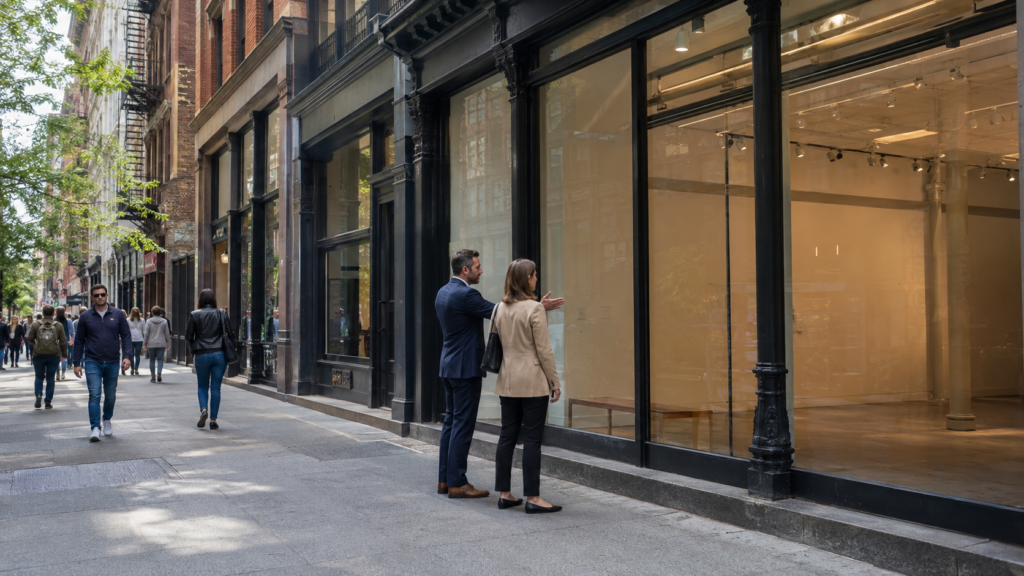
The retail lease cost in NYC depends heavily on the exact street and block. Two similar storefronts located only a short distance apart may have very different rental values. Retail tenants should avoid relying on one Manhattan-wide average. The value of a storefront may depend on visibility, customer traffic, frontage, permitted use, and surrounding businesses.
Street and Exact Block
A busy shopping corridor usually attracts more customers than a quiet side street. Therefore, a highly visible storefront can command a much higher asking rent. However, a business does not always need the busiest or most expensive location. A professional service, appointment-based company, or destination business may perform well away from premium retail corridors.
Storefront Frontage and Visibility
Wide frontage, large display windows, corner exposure, and strong signage opportunities can improve a retail property’s value. Tenants should confirm whether the building allows their preferred signage. Historic district rules, landlord requirements, or local restrictions may limit exterior changes.
Customer Foot Traffic
Retailers and restaurants often depend on pedestrians. Therefore, they should examine foot traffic at different times and on different days. A location that appears busy during lunchtime may become quiet in the evening. Similarly, an area with strong weekend activity may not produce the same traffic during the working week.
Permitted Use
A space must support the tenant’s intended business. Zoning, the certificate of occupancy, building rules, and other requirements may affect the permitted use. A property previously used as an office may not automatically support a restaurant, salon, medical facility, or another specialized operation. Tenants should verify permitted use before making a long-term commitment.
Existing Infrastructure
Restaurants may require ventilation, plumbing, gas, grease traps, and adequate electrical service. Medical offices may need specialized plumbing, accessibility, and room configurations. Salons may require additional water, drainage, and electrical capacity. Existing infrastructure can reduce construction time and expense. However, the tenant should confirm that each system is functional, permitted, and suitable for the planned business.
Office vs. Retail Lease Costs in Manhattan
Office and retail properties are priced differently because they serve different purposes. Office rent depends heavily on building class, floor level, amenities, condition, layout, and access to transportation.
Retail rent depends more on the exact street, storefront frontage, visibility, foot traffic, and permitted use. Therefore, neither property type is always more expensive. A premium SoHo storefront may cost much more than an upper-floor office.
However, a Class A Midtown office could cost more than a retail property on a less active side street. The better comparison is not simply office versus retail. Tenants should compare properties based on how well each space supports the business, customers, employees, and long-term goals.
Additional Commercial Lease Costs to Budget For
Base rent represents only one part of the total commercial rent in Manhattan. Businesses should also budget for expenses that may arise before opening and throughout the lease.
Security Deposit or Letter of Credit
A landlord may require a cash deposit or letter of credit. The requirement may depend on the tenant’s financial strength, credit, business history, and requested lease term. A newer business may be asked for greater security than an established company with strong financial statements. Personal or corporate guarantees may also affect the landlord’s requirement.
Annual Rent Escalations
Many commercial leases increase the rent each year. The lease may use a fixed percentage, fixed-dollar amount, or scheduled rent steps. Tenants should calculate the base rent for every year of the agreement. Multiplying the first-year rent by the number of years will not produce an accurate total when annual increases apply.
Operating Expense Escalations
Operating expenses may include common-area maintenance, building insurance, management, cleaning, security, and other property-related expenses. The lease should explain which costs can be passed to the tenant. It should also define the base year, calculation method, exclusions, and tenant’s share of the increase.
Real Estate Tax Escalations
Some leases require the tenant to pay a share of increases in the building’s real estate taxes. The amount may be measured against a defined base year. Tenants should understand how the share is calculated and whether major property changes could affect future obligations.
Utilities and Cleaning
Electricity, water, gas, internet, waste removal, and interior cleaning may not be included in the advertised rent. Utility needs can differ significantly. A traditional office may use much less power and water than a restaurant, salon, medical office, or technology business.
Business Insurance
Commercial leases normally require certain insurance coverage. The landlord may also need to be listed as an additional insured. The cost depends on the business type, property, coverage limits, and lease requirements. Tenants should obtain an estimate before finalizing their occupancy budget.
Legal and Professional Fees
A commercial lease can create important financial and legal obligations. Tenants should have a qualified commercial real estate attorney review the agreement. Depending on the property and planned use, the tenant may also need an accountant, architect, engineer, contractor, or permit specialist.
Moving, Signage, and Setup Costs
Moving expenses, furniture, equipment, signage, internet installation, security systems, and business setup costs should also be included in the budget. These expenses may not appear in the lease, but they still affect how much money the business needs before opening.
Tenant Improvement and Build-Out Costs
Many commercial properties require construction before the tenant can begin operating. The work may include flooring, walls, bathrooms, lighting, electrical improvements, plumbing, HVAC changes, accessibility upgrades, signage, and fire-safety systems. A property that requires extensive work may have a lower asking rent. However, that does not automatically make it the less expensive option.

What Is a Tenant Improvement Allowance?
A tenant improvement allowance is a contribution from the landlord toward approved construction expenses. The amount, payment method, and eligible expenses vary by lease. Some landlords provide a fixed amount per square foot. Others agree to complete a specific scope of work before delivering the property. The tenant improvement allowance in Manhattan should be considered alongside the base rent and lease term. A larger allowance may come with a longer commitment, higher rent, or stricter construction requirements.
Who Controls the Construction?
In a landlord-controlled build-out, the property owner manages the construction. In a tenant-controlled project, the tenant hires and manages the contractor. A turnkey arrangement may require the landlord to deliver the space in an agreed condition. Each approach affects the tenant’s control, risk, timeline, and budget.
When Does Rent Begin?
Rent commencement is an important lease term. Tenants should determine whether rent begins when the lease is signed, when the property is delivered, when construction is completed, or when the business opens. Paying rent while waiting for permits or construction can increase the real cost of the project.
Does NYC Commercial Rent Tax Apply?
Certain tenants occupying commercial property in Manhattan south of 96th Street may be subject to New York City Commercial Rent Tax. According to the NYC Department of Finance, the tax may apply when annual or annualized gross rent reaches at least $250,000 and no exemption applies.
The stated tax rate is 6% of base rent. However, a 35% base-rent reduction lowers the effective rate to 3.9%. Credits and exemptions may also apply, including provisions for qualifying small businesses.
Commercial Rent Tax eligibility depends on the tenant, location, rent, income, and available exemptions. A qualified NYC accountant or tax professional should review the tenant’s specific situation.
Asking Rent vs. Effective Rent
Asking rent is the advertised rental rate. Effective rent considers the financial effect of concessions and other lease terms over the entire agreement. For example, free rent at the beginning of the lease can reduce the effective cost.
A landlord contribution toward construction can also improve the financial value of the agreement. However, a lower asking rate does not always produce the better deal.
One property may have a low base rent but high operating expenses and limited construction support. Another may have a higher base rent but include free rent, usable improvements, and more predictable additional expenses. Tenants should calculate the complete cost of each option before deciding.
How to Compare Two Manhattan Commercial Spaces
Businesses can make a clearer comparison by calculating the following expenses for each property:
- Base rent for every year of the lease
- Scheduled rent escalations
- Operating expenses and tax increases
- Estimated utilities and insurance
- Construction and build-out expenses
- Security deposit or letter of credit
- Free rent and other concessions
- Legal and professional fees
- Moving and setup costs
- End-of-lease restoration obligations
It is also helpful to compare the location, usable area, employee commute, customer access, delivery conditions, building systems, and permitted use. For example, tenants comparing Lower Manhattan options can review an available office space on Canal Street alongside a larger commercial space on Walker Street. Examining individual listings helps businesses understand how size, asking rent, layout, and location work together.
How to Negotiate a Manhattan Commercial Lease
A tenant may be able to negotiate much more than the base rent. The best priorities depend on the business, property, financial strength, and planned lease term.
Base Rent and Annual Increases
Tenants may negotiate the starting rent, annual escalation rate, or scheduled rent steps. Even a small difference can become significant over a long lease.
Free Rent
A free-rent period can help the tenant manage construction, moving, and early business expenses. However, tenants should confirm whether additional charges continue during that period.
Tenant Improvement Allowance
The tenant may negotiate landlord support for construction. The agreement should clearly explain eligible costs, approval requirements, payment timing, and responsibility for budget overruns.
Operating Expense Caps
Tenants may seek limits on certain controllable operating-expense increases. The lease should also identify expenses that are excluded from the calculation.
Real Estate Tax Base Year
The selected base year can affect future tax escalation payments. Tenants should understand how the base amount and their proportionate share are determined.
Personal or Corporate Guarantee
A guarantee may create financial responsibility beyond the business entity. Its amount, duration, and release conditions can be important negotiation points.
Assignment and Subletting Rights
A business may later need to relocate, expand, sell, or reorganize. Reasonable assignment and subletting rights can provide important flexibility.
Renewal and Termination Options
A renewal option can provide stability, while a carefully structured termination right may reduce long-term risk. Both terms should be reviewed alongside notice periods and pricing conditions.
End-of-Lease Restoration
Some agreements require tenants to remove improvements and restore the property before leaving. These obligations can create major costs at the end of the lease. Because commercial lease language can have legal consequences, tenants should have a qualified attorney review the final agreement.
When Should You Work With a Manhattan Commercial Broker?
A local commercial broker can help identify properties, compare neighborhoods, evaluate asking rents, and understand the financial structure of different options. A broker may also assist with letters of intent and business-term negotiations.
This can help tenants identify hidden cost differences before the lease reaches the legal review stage. Jonathan Maimran provides real estate brokerage services in Manhattan for leasing transactions, tenant representation, landlord representation, and commercial negotiations. His local market knowledge can help businesses compare office and retail opportunities across Chinatown and the wider Manhattan market. A broker does not replace the tenant’s attorney, accountant, architect, or other professional advisers. Instead, each professional helps address a different part of the transaction.
Final Thoughts
Understanding commercial lease costs in NYC requires more than checking the advertised base rent. The total financial commitment may include annual increases, building expenses, utilities, insurance, construction, professional fees, deposits, and taxes.
Businesses should compare the complete cost over every year of the proposed lease. They should also evaluate usable space, permitted use, location, building systems, customer access, and long-term flexibility.
Planning to lease office or retail space in Manhattan? Explore Jonathan Maimran real estate services for help comparing properties, evaluating lease economics, and negotiating a commercial transaction that supports your business goals.
Frequently Asked Questions
How much does it cost to lease commercial space in Manhattan?
The cost depends on the neighborhood, property type, size, building quality, condition, and lease structure. In Q2 2026, the overall Manhattan office asking rent averaged $72.83 per square foot. Individual office and retail properties may be priced above or below broad market averages.
How is commercial rent calculated in NYC?
Commercial rent is commonly quoted as an annual amount per rentable square foot. Multiply the annual price per square foot by the rentable area to estimate annual base rent. Divide the result by 12 to estimate monthly base rent before additional expenses.
What additional costs do commercial tenants pay?
Additional expenses may include rent escalations, operating costs, property-tax increases, utilities, insurance, deposits, legal fees, construction, permits, moving expenses, and possible Commercial Rent Tax.
Is office or retail space more expensive in Manhattan?
Neither property type is always more expensive. Office costs depend heavily on the building and submarket. Retail costs depend more on the exact street, frontage, visibility, foot traffic, and permitted use.
Can commercial lease costs be negotiated?
Many financial and business terms may be negotiable. These can include base rent, free rent, annual increases, improvement allowances, expense caps, guarantees, renewal options, and restoration requirements. The available flexibility depends on the property, landlord, tenant, and market conditions.